


Blue Flax Lily is an Australian native clumping plant that is easy to grow and very hardy. It will grow to a height and width of around 1 metre and has grass-like strappy leaves.
In spring, the plant will grow lovely blue flowers in sprays on tall stems. These are followed by bright royal-blue berries that are edible and regarded as bush food.
Dianella caerulea grows from underground rhizomes which means that it can easily be cut back and will continue to resprout. It’s both frost and drought-tolerant and will handle coastal conditions as well.
Light requirements
It’s best to plant the blue flax lily from a seedling. Choose a sunny spot in your garden to get the optimum amount of flowers and berries.

However, the plant will also grow in a partially shaded spot but this may reduce the yield. But, if you’re growing it for its ornamental value, this is not a problem.
You can plant the blue flax lily at any time but in cooler regions, it’s best to plant in spring or summer. This is because the young plants are not as frost-tolerant as those that have become well-established.
Temperature and humidity
The blue flax lily can be grown in most areas of Australia as it can handle a wide variety of temperature ranges. It is both frost and drought-tolerant when fully established.

However, you want to ensure that young plants are protected from frost in their first year of growth. You should also protect your plants from strong winds.
Soil requirements
This hardy plant will grow in most soil types as long as the soil is relatively free-draining. It can even be grown in pots with a premium potting mix.
The preferred soil pH should be acid to neutral, so it’s a good idea to incorporate a little compost before planting. This will help to get your plant off to a good start and help to lower the pH of alkaline soils.
Water requirements
The blue flax lily is a sub-tropical plant. This means that it needs to be kept well-watered until it has become established in your garden.
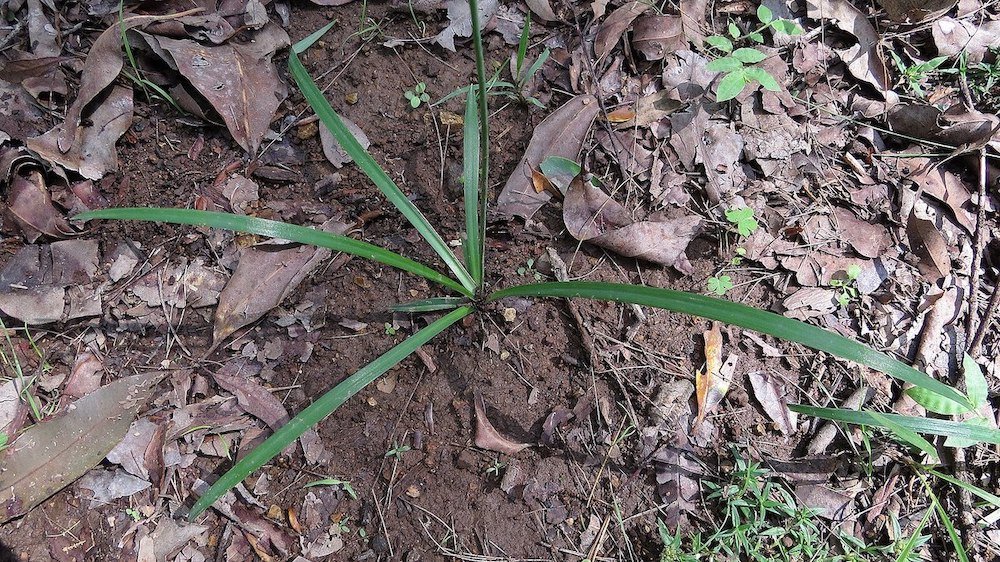
Young plants should be watered at least once a week or more often if the weather is hot and dry.
Once the plant is established, it should survive on rainwater alone except for extended periods of dry weather when it might appreciate a little extra water.
Fertiliser
Fertilise your blue flax lily once a year in spring to ensure good growth and berry production. Use good quality native plant food to get the best results.
Pruning Blue Flax Lily
In autumn when the plant has finished flowering and fruiting, you want to cut off the spent flower spikes in order to keep your plant nice and neat.
You can also trim back any leaves that have spread too far and remove any yellowing ones at the same time.
How to propagate Dianella caerulea
As this plant grows from underground rhizomes, it’s quite easy to propagate new plants by digging up a clump and dividing it up into smaller sections.
This is best done in autumn once flowering and fruiting has finished.
You can also try your hand at growing the blue flax lily from seeds that you’ve harvested from your original plant.
These should be collected in autumn and started indoors in cooler regions. The seeds should germinate fairly easily when sown into a good-quality seed-raising mix.
Keep your little plants well-watered and only plant them out in the garden once the danger of frost is over.
When to harvest the Dianella caerulea berries
The bright blueish berries can be harvested in late summer or early autumn as soon as they turn a royal blue colour. Make sure you harvest them before they’re too ripe so that you don’t damage them.

Just pick them off the bush and they can be left to ripen further inside.
The berries have small black seeds inside that have a nutty flavour. Both the flesh and seeds of the berries are edible and these can be eaten fresh or put into baked goods.
It’s important to note that you need to be sure that you have a Dianella caerulea species to ensure that the berries are indeed safe for human consumption.
There are other Dianella species that have berries that are known to be toxic when consumed. Some known examples of these are Dianella tasmanica, Dianella nigra and Dianella intermedia.
Dianella caerulea pests and diseases
Being an Australian native, the blue flax lily is not prone to many pests and diseases and should grow quite happily in your garden without any need for pest or disease management.
On rare occasions, you might find that sap suckers such as mealybugs or aphids are attracted to your plant. This will usually only happen if your plant is under stress.
These pests can easily be controlled with an organic oil spray such as eco-oil or white oil.
How to grow Dianella caerulea in pots
These plants can easily be grown in large pots and still be relatively low-maintenance. Choose a pot that’s at least 30cm in diameter to accommodate the growth of the plant.
Growing these in pots is an ideal way to have them in your garden without worrying about them spreading too far with their rhizomes.
Use a quality potting mix and ensure that you keep your plants well-watered.
If the plant starts to look like it’s wanting to escape its pot, just take it out and divide it up into two or three smaller sections before repotting again.
FAQ
Are Dianella caerulea berries edible?
Yes, the bright blue berries are edible but make sure that you have the right species before consuming them as some species of Dianella have toxic berries.
Is Dianella caerulea native to Australia?
Yes, this species is native to the entire eastern states of Australia including Tasmania. It is commonly found in sub-tropical and temperate regions.
Is Dianella caerulea invasive?
No, this particular species of Dianella is not considered invasive in Australia. However, once you have it growing in your garden, it might be difficult to remove entirely unless you dig up all the underground rhizomes.


