


Each year when spring arrives, it’s time for your lawn to begin its new growth after the winter dormancy.
Unfortunately, it’s also time for all those weed seeds, that have lain dormant in the soil over winter, to germinate and infest your lawn with weeds.
Ridding your lawn of weeds takes a little time and effort but the results will be worth it.
Before you head to your local hardware or garden centre, it’s important to identify the type of weeds in your lawn. This will allow you to treat them effectively.
Common lawn weeds in Australia
Common lawn weeds in Australia can be grouped into two different categories, broadleaf and grassy weeds.
It’s important to identify these correctly because they’ll require different treatments to eradicate them.
Broadleaf weeds

Broadleaf weeds have leaves that are different from blades of grass.
The leaves are much broader and these weeds are easier to control with a couple of applications of herbicides designed specifically for this task.
Broadleaf weeds include:
- Bindii
- Dandelion
- Oxalis
- Cudweed
- Soursobs
- Chickweed
- Clover
- Thistle
- Lambs tongue
- Wild carrot weed
- Catsear
- Pennywort
Grassy weeds

On the other hand, grassy weeds have leaves that are similar to the blades of grass that your lawn consists of.
These are somewhat harder to control because a broadleaf herbicide will not work on them.
Grassy weeds include:
- Crabgrass
- Winter grass
- Paspalum
- Nutgrass
- Couch grass
- Onion weed
How to kill weeds but not your grass
In order to determine the best way to kill the weeds in your lawn, we have to break them into one of the two categories and then apply the appropriate treatment.
How to kill broadleaf weeds

The quickest and most effective way to kill broadleaf weeds in your lawn is to use a herbicide designed for this purpose.
These herbicides are classified as ‘selective’ because they’ll kill the weeds but not your grass.
The best time to effectively control broadleaf weeds is to use a pre-emergent herbicide in late winter. This type of herbicide will kill the weed seeds before they have time to germinate.
However, there are also selective post-emergent herbicides that you can use to kill broadleaf weeds throughout the growing season.
A selective herbicide is best applied using a weed sprayer to cover your entire lawn.
It will usually take around 2 to 3 weeks for the weeds to die. At this time, your lawn may need another application to kill the weeds that were missed or that have germinated since you sprayed.
How to kill grassy weeds in your lawn
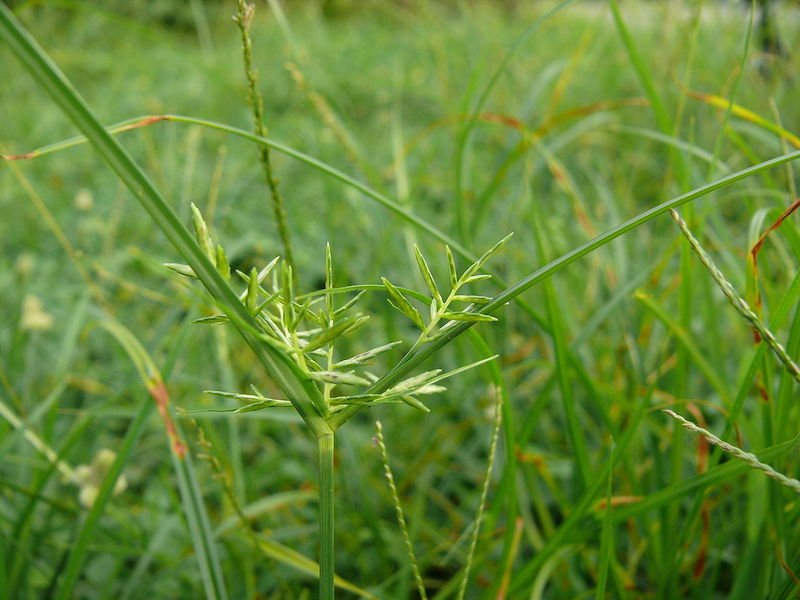
Grassy weeds are much more difficult to control because selective herbicides will not work on them.
However, you can use a pre-emergent herbicide in late winter that will prevent the seeds from germinating at all.
Bear in mind, that this method is not suitable if you’ve also seeded your lawn because the grass seeds won’t germinate either.
Another option to get rid of grassy weeds in your lawn is to remove them manually with some type of weeding tool.
Remember that you want to remove the roots as well as the top growth of the weeds. This can be quite effective if you only have a small lawn area but is extremely labour intensive for larger lawns.
The solution for larger lawns is to carefully spot-treat the weeds with a non-selective herbicide such as glyphosate.
It’s important to remember that this will kill any grass that it comes into contact with as well.
Therefore, you want to use either a spray bottle with a directional nozzle or a special weed-killer applicator like the Yates Zero Weeding Brush.
The herbicide will have to be applied to each individual weed in your lawn.
How does weed killer work?

In Australia, there are basically three types of weed killers: pre-emergent, selective, and non-selective.
These all work in different ways and are used to treat different types of weeds.
Pre-emergent weed killers
These types of weed killers will prevent the weed seeds from germinating in the first place.
They effectively form a barrier on the surface of the soil so no new weeds can grow.
This type of weed killer is best used in winter and is especially useful for treating grassy weeds.
Selective weed killers
Selective herbicides are designed to treat broadleaf weeds and there are different products for different weeds.
However, you do have to be careful if you have a buffalo grass lawn because not all of these are suitable.
Therefore, it’s important to read the label to ensure that the herbicide is safe for your type of lawn.
The main active ingredients in these weed killers are dicamba and bromoxynil. While many herbicides containing only bromoxynil are safe to use on buffalo grass, those containing dicamba are not.
Non-selective weed killers
These types of weed killers are designed to kill all plants, so they need to be used with extreme care.
They are effective in controlling grassy weeds in your lawn but have to be spot-applied to each weed using a weed wand or brush applicator.
Weed killers that don’t kill grass
Selective herbicides are the only weed killers that won’t kill your grass.
While pre-emergent herbicides won’t kill the grass that is already growing, they will stop further seeds from germinating.
Here are a few that you can try:
- Amgrow Bin-Die (view at Aussie Gardener)
- Yates Zero Bindii Clover Weeder (view at My Deal)
- Dicamba M Selective Herbicide (view at Amazon)
- Brunnings Feed and Weed for lawns
Remember: Dicamba cannot be used on buffalo lawns.
Weed killers that do kill grass
Non-selective weed killers that contain glysophate or similar ingredients will kill your grass as well as the weeds.
These include:
- Roundup (View at Amazon)
- Hortico Weed Killer
- Eco-Organic Slasher (View at Aussie Gardener)
FAQ
What kills clover but not grass in Australia?
A selective herbicide such as Amgrow Bin-Die will kill clover in your lawn but will not harm the grass.
What is the best time of day to spray weeds?
It’s best to spray your weeds early in the morning. This is because many herbicides require adequate amounts of sunlight for them to become active and kill the weeds.